
Book with confidence
Connecting rooms: a family stay checklist
Connecting rooms can solve a family’s need for proximity and sleeping space, but the phrase is not precise enough to book without follow-up questions.
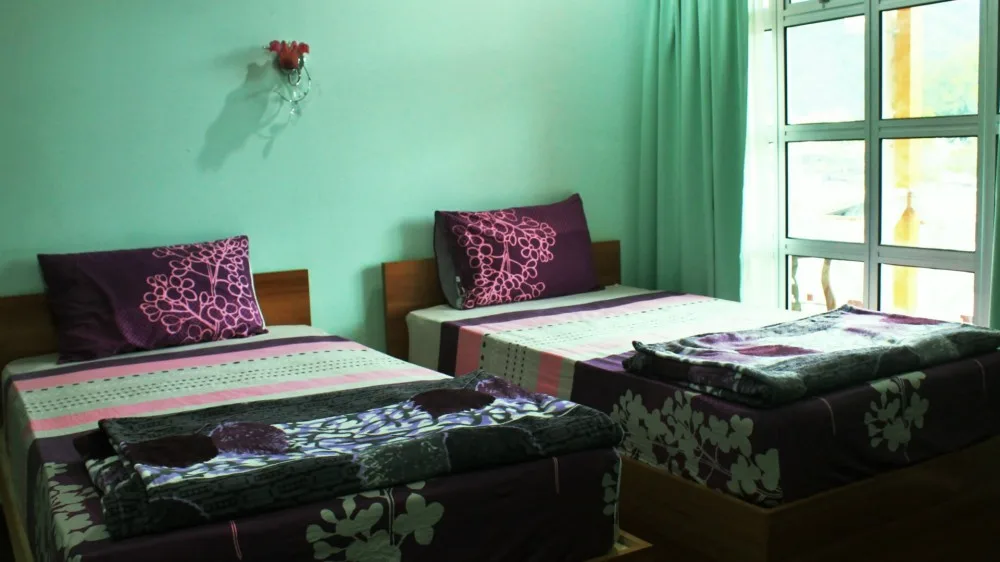
Define the connection
Ask whether the rooms share an internal door, sit directly beside each other, or are merely in the same building. For a family with young children, these arrangements have different supervision and privacy implications. Request the exact arrangement in the written confirmation.
Confirm whether the connecting door can be locked from both sides and whether both corridor doors require separate keys. If the operator cannot guarantee the connection until arrival, decide whether that uncertainty is acceptable before paying.
Count beds and permitted guests
List every adult and child, then map each person to a real bed or approved extra mattress. Do not assume a child can be added without affecting capacity or price. Ask whether cots or extra bedding are available and whether they reduce usable floor space.
A pair of rooms may offer more beds than the property permits guests, or permit extra guests only with a charge. Capacity and bedding both need written answers.
Bathrooms, noise and routines
Confirm whether each room has its own bathroom. Two bathrooms can materially improve a family’s departure morning, while one internal door can make different bedtimes easier to manage. Ask about quiet hours if children sleep early or the group plans a predawn departure.
Families should also ask about stairs, balconies, hot-water arrangements and the walking path from parking. Describe a mobility or safety need factually; do not rely on a broad label such as “family friendly”.
Price the complete arrangement
Request one total for both rooms and all guests. The quote should state meals, extra mattresses, taxes or fees, deposit and cancellation terms. If one room must be cancelled separately, ask whether the connecting arrangement and remaining price change.
For comparison, write down the total for one larger room, two independent rooms and the confirmed connecting option when all are available. Choose based on sleep, supervision and total cost—not the lowest advertised unit price.
D’Olundus family enquiry example
A useful request is: “Two adults and two children, arriving Friday and leaving Sunday. We need two rooms with an internal connecting door if available. Please confirm bed types, permitted occupancy, both bathrooms, total price, deposit, breakfast and cancellation terms.”
D’Olundus historical information identifies connecting arrangements, but current combinations remain subject to confirmation. The enquiry process is designed to collect the facts needed for a real quote without sending the form data to this website.
Plan the two-room routine
Decide which adult holds each key, which room children use and what happens if the internal door locks. Put medication, essential child items and one phone in predictable places. This is ordinary family organisation, but it becomes more important when the sleeping space is divided.
Ask whether corridor access, stairs or outdoor walkways separate the rooms from reception and parking. If the arrangement is adjacent rather than internally connected, consider whether children can safely move between rooms and whether an adult must remain in each room. The answer may change the preferred bed allocation.
At check-in, inspect that the confirmed rooms and connection match the written arrangement before unpacking. Report a mismatch promptly and keep the discussion factual: quote the confirmed feature, show the message and ask what equivalent solution is available. A family checklist works best when it prevents assumptions before payment and provides a clear reference if plans change.
Editorial conclusion
For families, proximity is only one part of the decision. The arrangement must also provide permitted occupancy, workable beds, suitable supervision, bathrooms, safe movement and a total price. Prioritise an internal connection when younger children cannot occupy a corridor-separated room independently. For older family groups, adjacent rooms may be sufficient and offer more flexibility. Record which version was promised so “connecting” is not interpreted differently at arrival. Reconfirm the allocation shortly before travel when the connection is essential, and keep an acceptable fallback in mind before the family reaches reception.
Sources and method
This guide combines first-party D’Olundus records with the primary sources below. External operating details can change; check the linked source for your travel date.
Continue planning
Related Kundasang stay guides
Book with confidence · 8 min read
Direct accommodation booking checklist for Malaysia
What to put in a written quote before transferring a deposit for a Kundasang stay.
Read the guide
Book with confidence · 8 min read
How to verify a Kundasang stay before paying
A practical verification sequence for listings, contact details, written quotes and payment requests.
Read the guide
Book with confidence · 9 min read
How to compare Kundasang accommodation quotes fairly
Compare the total room arrangement, inclusions, deposit and cancellation terms—not one headline number.
Read the guide