
Choose a stay
Kundasang room types for couples and families
“Queen”, “twin” and “family room” are useful labels, but they do not fully describe capacity, privacy or the price. Compare the physical arrangement and written occupancy terms before deciding which option suits your group.
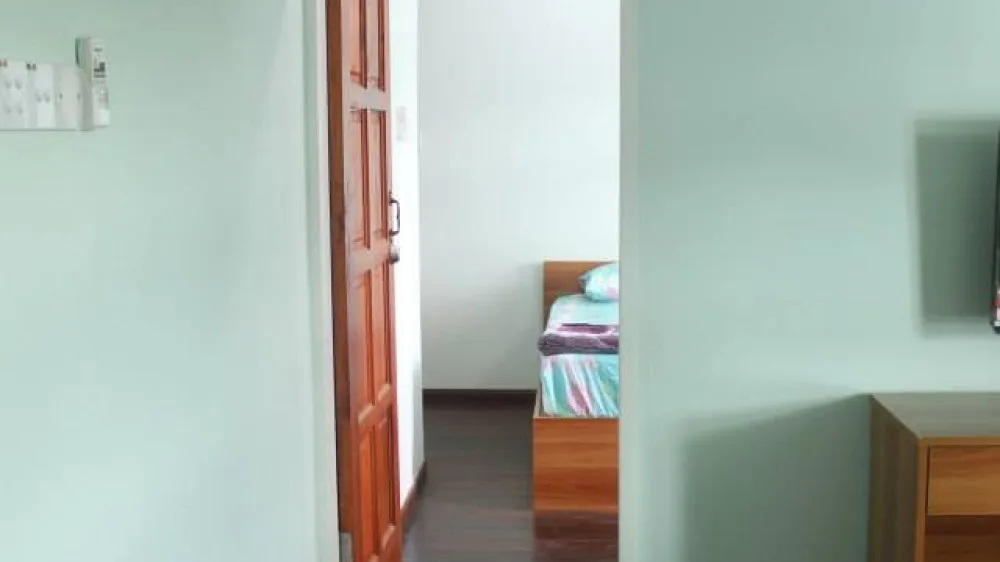
Read beyond the room name
A Standard Queen normally signals one queen-size bed, while a Standard Twin normally signals two separate single beds. The label does not automatically confirm floor area, view, extra-bed space or the number of guests the operator permits. Two properties can use the same name for materially different rooms.
Ask for the exact number and type of beds, maximum adults and children, attached-bathroom arrangement and whether an extra mattress is possible. If the group is sharing transport but not a sleeping schedule, two twin beds can be more useful than a queen even when both rooms have the same stated capacity.
When connecting rooms are valuable
Connecting or adjacent rooms can help a family stay close while preserving more sleeping space. Confirm what “connecting” means at the specific property. It may mean an internal door, rooms beside each other, or rooms in the same block. Those are not interchangeable for parents supervising younger children.
Request written confirmation of the exact combination reserved. If an internal connection is essential, say so plainly and do not accept “subject to availability” as the final confirmation. Ask whether both rooms have their own bathroom, whether the connecting door locks, and how many keys are provided.
Worked example: two adults and two children
Suppose a family initially asks for one queen room because it appears cheaper. The operator then confirms that the standard occupancy is two and an extra mattress accommodates only one child. The family must compare a second room or an approved connecting arrangement, including any breakfast and extra-person charges. The initial headline rate is no longer a valid comparison.
A useful written quote would state the two room types, total guest count, bedding, full amount, deposit, included meals, check-in time and cancellation terms. That document lets the family compare a real arrangement rather than two incomplete “from” prices.
Questions that prevent room disputes
Before paying, ask whether the photo represents the booked room category, whether stairs are involved, whether parking is beside the room or in a shared area, and whether a late arrival changes key collection. Guests with mobility, luggage or young children should describe the practical constraint instead of assuming the property interprets “easy access” in the same way.
Also separate amenities from room layout. Wi-Fi, television, hot water, tea or coffee and breakfast can change independently of the bed arrangement. Put essential items in the quote request and keep the answer with the booking confirmation.
How D’Olundus presents its rooms
D’Olundus historical material describes Standard Queen, Standard Twin and connecting options. The current site deliberately does not infer a live allocation from those archives. Availability, exact combinations and guest capacity are confirmed during an enquiry.
Use the Rooms page to see the established arrangements and real archived photographs, then send the dates, adult and child count, preferred layout and any non-negotiable requirement. That is more reliable than choosing from a room label alone.
Turn the room description into a floor plan
You do not need an architectural drawing. Sketch rectangles for each room, bed and bathroom, then mark the corridor door and any internal connecting door. Add the people who will sleep in each space. This exposes whether “family arrangement” means enough beds, whether a child is expected to share, and whether anyone must pass through another room at night.
For a couple, the same sketch can clarify whether separate twin beds are preferable to a queen and whether luggage will make an extra mattress impractical. For two adults travelling as friends, a twin room may avoid an awkward assumption that is never visible in a promotional room title.
Ask the operator to correct the sketch in words if any part is wrong. The goal is not to demand a formal plan; it is to make the sleeping arrangement explicit. Add the confirmed arrangement to the written quote and recheck it if the operator changes the room category before arrival.
Editorial conclusion
Choose a room category only after the operator has translated its label into beds, guests, bathrooms, connection and price. When two arrangements both work, prefer the one that reduces avoidable negotiation at check-in. A clear twin room can be better than an ambiguous family room, and two confirmed connecting rooms can be better than squeezing into a headline-cheaper option. The right room is the arrangement the whole group can describe before payment.
Sources and method
This guide combines first-party D’Olundus records with the primary sources below. External operating details can change; check the linked source for your travel date.
Continue planning
Related Kundasang stay guides

Choose a stay · 8 min read
Where to stay in Kundasang: choose the right base
A practical framework for choosing between a near-town stay, a park-side base and a more secluded highland setting.
Read the guide
Choose a stay · 7 min read
Near town or secluded: which Kundasang stay fits?
Compare convenience, driving, meals and atmosphere before choosing a highland location.
Read the guide
Choose a stay · 8 min read
Accessibility questions to ask before choosing a Kundasang stay
A practical way to check stairs, parking, walking surfaces, bathrooms and room access before booking.
Read the guide